What is BABAA? “Build America Buy America Act”
What Is BABAA and How the Green Circle Garden Qualifies for State & Federal Funding
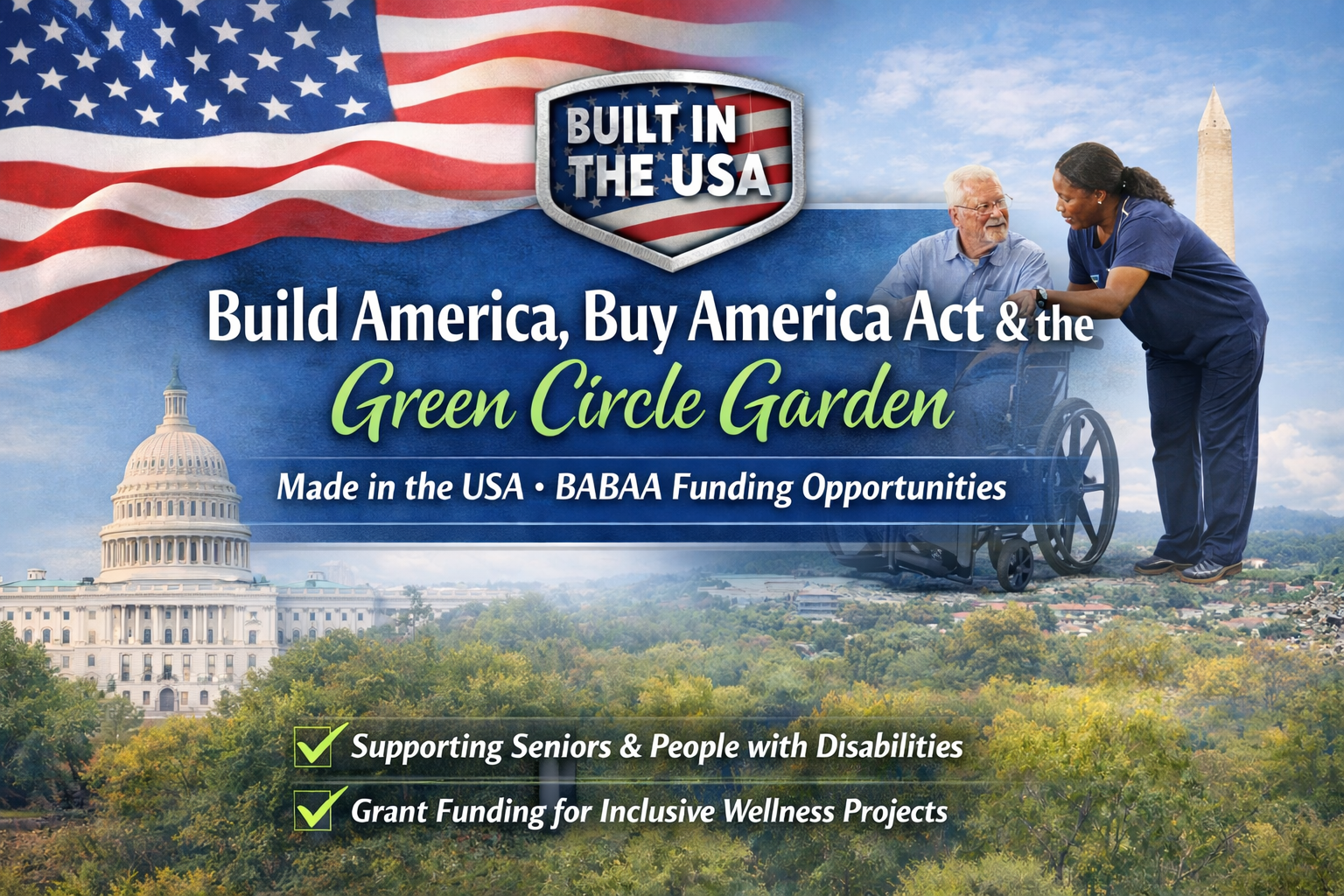
As accessibility, health, and wellbeing programs rise in priority across the U.S., government funding initiatives are increasingly targeted toward products that are manufactured domestically and support community care outcomes. One powerful opportunity for organizations — especially those serving seniors or people with disabilities — is the Build America, Buy America Act (BABAA).
In this guide, we’ll explain what BABAA is, why the Green Circle Garden qualifies, and how your organization can tap into available grants and funding to support accessible gardening programs that enhance wellbeing and care.
What Is the Build America, Buy America Act (BABAA)?
The Build America, Buy America Act (BABAA) is federal legislation that was passed in 2021 as part of the Infrastructure Investment and Jobs Act. Its purpose is to ensure that federally funded infrastructure, construction, and manufacturing projects rely on American-made materials and products.
Under BABAA, products that are manufactured, assembled, and materially sourced in the United States are given priority when state and federal agencies issue grants that use federal funds.
Why BABAA Matters
BABAA compliance means:
Products are eligible for federal and state grants that require domestic sourcing
Organizations can access funding more easily for facilities, accessibility upgrades, and wellness projects
Projects align with public policy goals for U.S. job creation and domestic manufacturing
Green Circle Garden: Fully BABAA-Compliant and Made in the USA
The Green Circle Garden is proudly manufactured in California, USA, using U.S. labor and materials where practicable. This means:
The product is eligible under BABAA for use in federally funded or state-funded projects that require Buy America compliance
Eligible organizations can include the Green Circle Garden in grant budgets with confidence
It supports U.S. manufacturing jobs and aligns with federal purchasing regulations
In short: because the Green Circle Garden is made in the U.S., it is entitled to BABAA funding opportunities when paired with eligible programs.
Who Can Benefit From BABAA Funding with the Green Circle Garden?
Many organizations serving seniors and people with disabilities can take advantage of BABAA-aligned funding:
Senior living communities
Independent living facilities
Hospitals and rehabilitation centers
Public schools and inclusive education centers
Community health and wellness nonprofits
Municipal public spaces and parks
These entities can include the Green Circle Garden in proposals for grants that support health, wellbeing, rehabilitation, accessibility, and community engagement programs.
Types of Grants to Consider
Here are some federal and state funding opportunities where the Green Circle Garden could be included:
✅ 1. Community Development Block Grants (CDBG)
CDBG funds can be used for community health and accessibility improvements.
📌 Info & application:
https://www.hud.gov/program_offices/comm_planning/communitydevelopment/programs
✅ 2. Older Americans Act (OAA) Grants
Supports services for older adults, including wellness and community programming.
📌 Info & application:
https://acl.gov/about-acl/authorizing-statutes/older-americans-act
✅ 3. Administration for Community Living (ACL) Grants
Funds programs that increase independence, dignity, and quality of life for older adults and people with disabilities.
📌 Grant search:
https://acl.gov/grants
✅ 4. Disability and Rehabilitation Research Projects (DRRP)
Supports research and service projects that improve the lives of people with disabilities.
📌 Info & application:
https://www.nidlr.nih.gov/programs
✅ 5. State-Level Accessibility & Health Grants
Each state often has its own health foundation or disability support funding (e.g., community wellness grants, aging services funds, veteran programs).
For example, Florida’s state grants:
https://www.myflorida.com/grants
Check with your local Department of Aging, Health, or Disability Services for additional opportunities.
How to Apply for Funding With the Green Circle Garden
Step 1: Identify Funding Sources
Search federal and state grants using official portals like:
Grants.gov — https://www.grants.gov
SAM.gov — https://sam.gov
Use keywords like:
ADA, accessibility, wellbeing, senior wellness, disability services, inclusive outdoor space, community health, rehabilitation programs
Step 2: Prepare Your Project Proposal
Include:
Your organization’s mission and demographics served
Why the Green Circle Garden is essential (accessibility, health benefits)
BABAA compliance statement
A detailed budget showing product and installation costs
Expected outcomes (wellbeing improvement, community engagement, therapeutic benefits)
Step 3: Include BABAA Certification
When applying, submit a BABAA compliance letter confirming:
Product is made in the USA
Compliance with Buy America requirements
Project eligibility under BABAA
Our BABAA Compliance Letter template (on your letterhead) can be customized for inclusion in grant attachments.
Why This Matters for Wellbeing Programs
When your organization installs accessible gardens like the Green Circle Garden:
Residents enjoy therapeutic benefits (stress reduction, increased activity, purposeful engagement)
Engagement, social connection, and mental wellness improve
Outdoor spaces become inclusive and used by everyone
Seniors and individuals with limited mobility gain independence
This aligns closely with the goals of many grant programs focused on health, aging, and disability services.
Bringing It All Together
By understanding BABAA and pairing it with thoughtful proposal planning, your organization can access funding to:
✔ Improve outdoor accessibility
✔ Enhance wellbeing and community engagement
✔ Support therapeutic programming
✔ Use U.S.-made products that meet federal compliance
The Green Circle Garden isn’t just a raised bed—it's a pathway to transforming outdoor spaces into accessible, meaningful environments that support the vision of community, health, and inclusion.
Ask us a question

44 Gal Water Reservoir (Accessible Tub)
7.5 Cu.Ft grow tray.
100Ft of pre/cut 1/2” reusable wicks.
GeoTextlie filter fabric.
Absorbent Mats.
Includes water inlet valve, water meter and side outlets.
Fittings are pre-assembled for quick setup.
Color: Beige Base + Dark Green Top