Plant Spacing Guidelines for Your Green Circle Garden
Grow Bigger, Harvest More
One of the unique advantages of the Green Circle Garden is its built-in self-watering system. By providing plants with a consistent supply of water directly to their root zone, many vegetables can produce significantly more growth than they would in traditional garden soil, with some crops growing up to four times more productive and up to twice as fast under ideal conditions.
Because plants can reach their full genetic potential, we recommend following standard plant spacing guidelines while allowing enough room for mature plant growth.
For more information, see Grows Faster.
Training and Pruning
Many trailing or vining plants can be trained to grow outside the planter. Directing vines over the edge or onto a trellis maximizes growing space inside the garden while improving air circulation, sunlight exposure, and harvesting.
Examples include:
Tomatoes
Cucumbers
Pumpkins
Melons
Squash
Beans
Learn more in Pruning & Training Plants.
Understanding the Growing Area
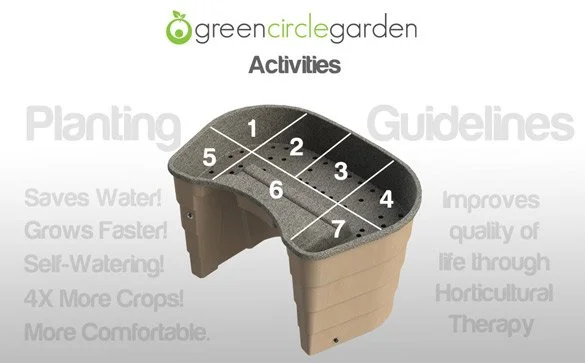
The Green Circle Garden provides approximately 7 square feet of growing space.
Use the planting diagram below to select the seven planting sections that best suit your crop selection.
Plant Placement Matters
For the best growing experience:
Plant small, low-growing vegetables such as radishes, beets, carrots, spinach, lettuce, arugula, onions, and herbs in Section 6 of the planting diagram. Keeping shorter crops together prevents larger plants from shading them and maintains easy access to the entire growing area.
Position larger fruiting plants such as tomatoes, peppers, melons, pumpkins, cucumbers, and squash along the outer edge of the planter where they can be trained to grow outward toward the sunlight.
Tall crops should be placed where they will not block sunlight from smaller vegetables.
Planning your garden according to the mature height and width of each plant will increase productivity and make harvesting easier.
Root Development
Many vegetables naturally develop extensive root systems. As plants mature, their roots may grow through the openings in the grow tray and into the lower water reservoir. This is completely normal and allows plants to access a continuous supply of moisture, resulting in vigorous growth and healthier crops.
Plant Spacing
When determining how many plants to grow, always consider the mature size of the variety—not its size when purchased or transplanted.
Proper spacing provides:
Better air circulation
Improved sunlight penetration
Reduced competition for nutrients
Lower risk of fungal diseases
Easier harvesting and maintenance
Avoid overcrowding. Although the Green Circle Garden promotes exceptional growth, plants still require adequate space to reach their full potential.
Mix and Match Your Garden
Vegetables do not need to be grouped by variety. In fact, mixing different vegetables, herbs, and flowers throughout the garden can improve biodiversity and often leads to healthier plants.
Companion planting can help:
Attract pollinators
Discourage pests
Improve use of available space
Extend harvesting throughout the season
If you prefer separate planting zones, simply insert thin plastic dividers or wood laminate into the soil to create individual growing sections.
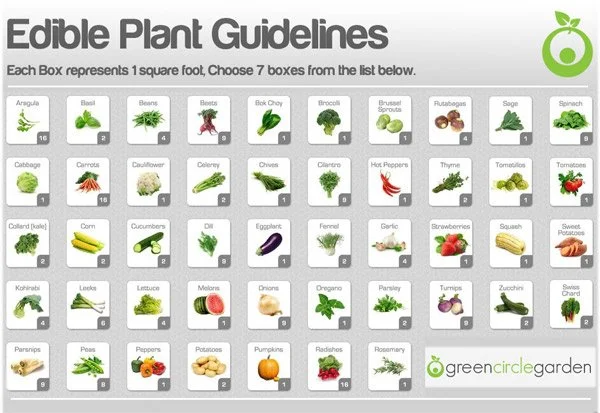
Typical Plant Quantities
The diagram below represents approximately how many plants can comfortably be grown in one Green Circle Garden.
As a general guide:
1 plant: Tomato, pumpkin, zucchini, cabbage, broccoli
2 plants: Pepper, cucumber, eggplant, kale
4 plants: Swiss chard, lettuce, celery
9 plants: Bush beans, spinach, onions
16 plants: Beets, carrots, radishes
25 or more: Arugula, baby greens, herbs, green onions
Always refer to your seed packet or plant label for the recommended spacing of each variety.
Gardening Made Easy
Whether you're growing fresh vegetables, herbs, flowers, or creating a therapeutic garden, the Green Circle Garden is designed to make gardening easier and more productive.
With proper plant spacing, occasional pruning, and simple plant training, your Green Circle Garden will reward you with abundant harvests throughout the growing season.
For ideas on creating a therapeutic gardening space, visit our Sensory Garden page.
Happy Gardening!
Thanks for sharing Green Circle Garden with your family and friends!