ADA Landscape Design: Create Barrier-Free Outdoor Spaces with Green Circle Garden
ADA Landscape Design: Create Barrier-Free Outdoor Spaces with Green Circle Garden
Accessible outdoor environments are no longer optional—they are essential. Schools, hospitals, senior living communities, and public facilities are prioritizing ADA landscape design to ensure their spaces are inclusive, safe, and usable for everyone. Yet many outdoor areas remain underutilized because they lack thoughtful planning and accessible features.
The good news? Transforming these spaces into barrier-free environments does not require massive construction. With the right design approach and the right system, any unused courtyard, patio, or lawn can become an accessible, engaging garden.
What Is ADA Landscape Design and Why It Matters
ADA landscape design focuses on creating outdoor spaces that meet accessibility standards while promoting independence and usability. This includes proper height ranges, reach distances, circulation paths, and safe materials.
Traditional gardens often create barriers:
Excessive bending or kneeling
Limited wheelchair clearance
Deep planting beds that are hard to reach
High-maintenance irrigation systems
True barrier-free landscape design eliminates these obstacles and replaces them with thoughtful, user-centered solutions.
Turning Unused Outdoor Areas into Barrier-Free Gardens
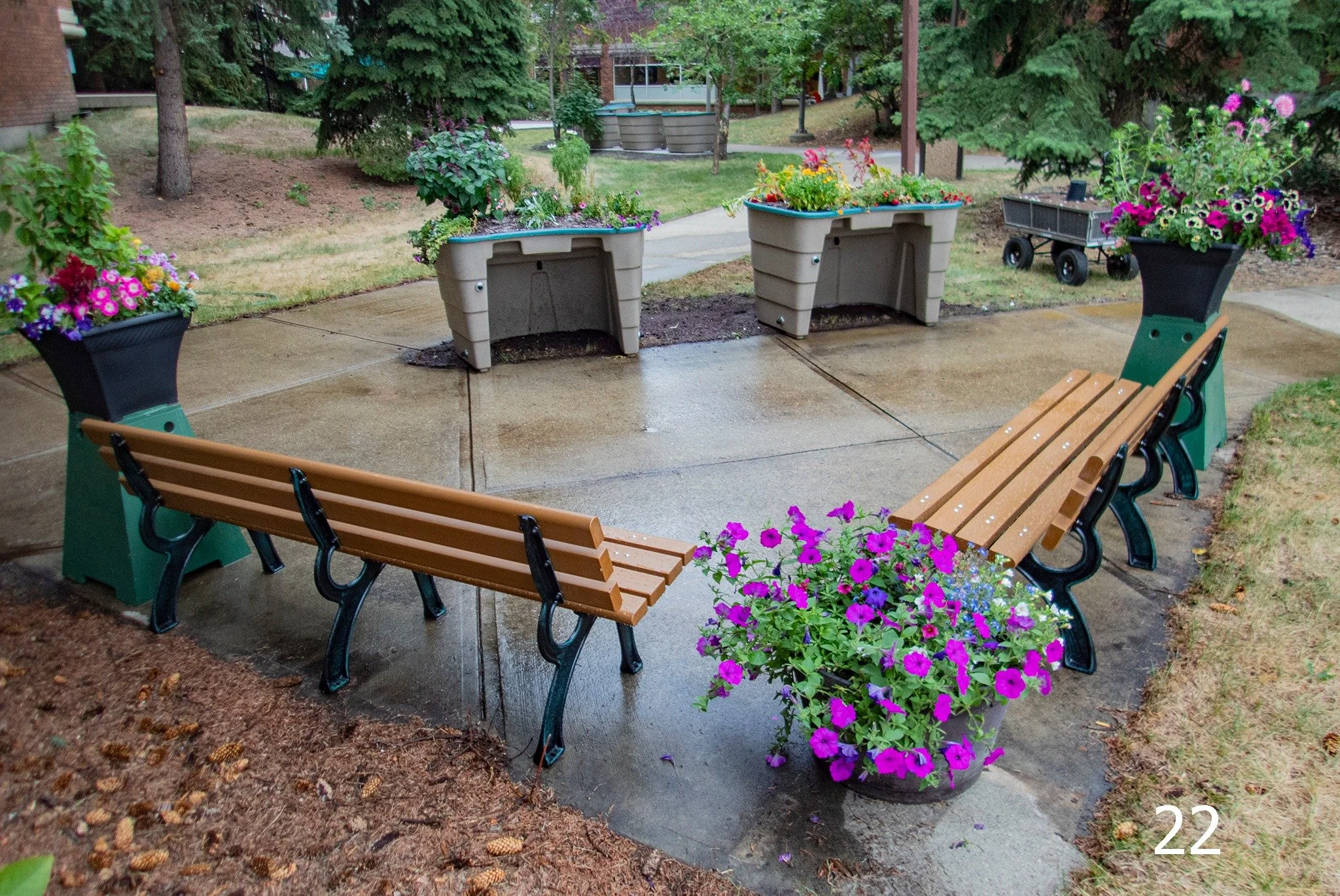
Many facilities have overlooked outdoor areas—empty courtyards, unused corners, or flat lawns that serve no functional purpose. The Green Circle Garden transforms these underutilized spaces into vibrant, accessible garden environments.
360° Accessibility for True Barrier-Free Use
The circular layout allows users to reach planting areas comfortably from one position. This design supports wheelchair users and individuals with limited mobility by minimizing the need for repositioning. It promotes independence and encourages participation from people of all ages and abilities.
Self-Irrigation Reduces Physical Strain
Accessibility also means reducing maintenance burdens. The Green Circle Garden includes:
100 feet of pre-cut reusable wicking ropes
A 42-gallon integrated water reservoir
A water inlet valve and meter
This self-irrigating system provides consistent moisture while minimizing daily watering tasks. For schools, hospitals, and senior living communities, this means less staff workload and more sustainable garden care.
ADA Landscape Design Solutions for Schools, Hospitals, and Senior Living
Schools and Inclusive Education
Barrier-free gardens create inclusive outdoor classrooms where students of all abilities can participate equally. Gardening supports STEM education, nutrition awareness, and environmental learning while ensuring accessibility for students with mobility challenges.
Hospitals and Rehabilitation Centers
Healing gardens play a significant role in patient recovery and mental wellness. An ADA-accessible garden allows patients to engage safely in therapeutic horticulture programs that promote gentle movement and sensory engagement.
Senior Living Communities
Gardening fosters purpose, routine, and social interaction. A barrier-free garden design ensures residents can participate independently, strengthening physical health and emotional wellbeing.
Community Gardens
Community gardens should be accessible to everyone. Incorporating ADA landscape design principles ensures individuals with mobility limitations are not excluded from participation.
Building Long-Term Barrier-Free Outdoor Spaces
Constructed from durable, high-quality HDPE and manufactured in the USA, the Green Circle Garden is designed for long-term institutional use. Its robust construction makes it ideal for high-traffic environments such as schools, healthcare facilities, and public spaces.
By combining thoughtful engineering with accessible design, the Green Circle Garden makes it possible to convert unused outdoor areas into inclusive, barrier-free landscapes that benefit entire communities.
Designing Outdoor Spaces for Everyone
Effective ADA landscape design is about more than compliance—it’s about dignity, independence, and inclusion. Transforming underutilized spaces into barrier-free gardens improves engagement, enhances wellbeing, and strengthens community connections.
With the Green Circle Garden, creating an accessible outdoor space is simple, scalable, and impactful—proving that barrier-free design can be both practical and inspiring.

44 Gal Water Reservoir (Accessible Tub)
7.5 Cu.Ft grow tray.
100Ft of pre/cut 1/2” reusable wicks.
GeoTextlie filter fabric.
Absorbent Mats.
Includes water inlet valve, water meter and side outlets.
Fittings are pre-assembled for quick setup.
Color: Beige Base + Dark Green Top